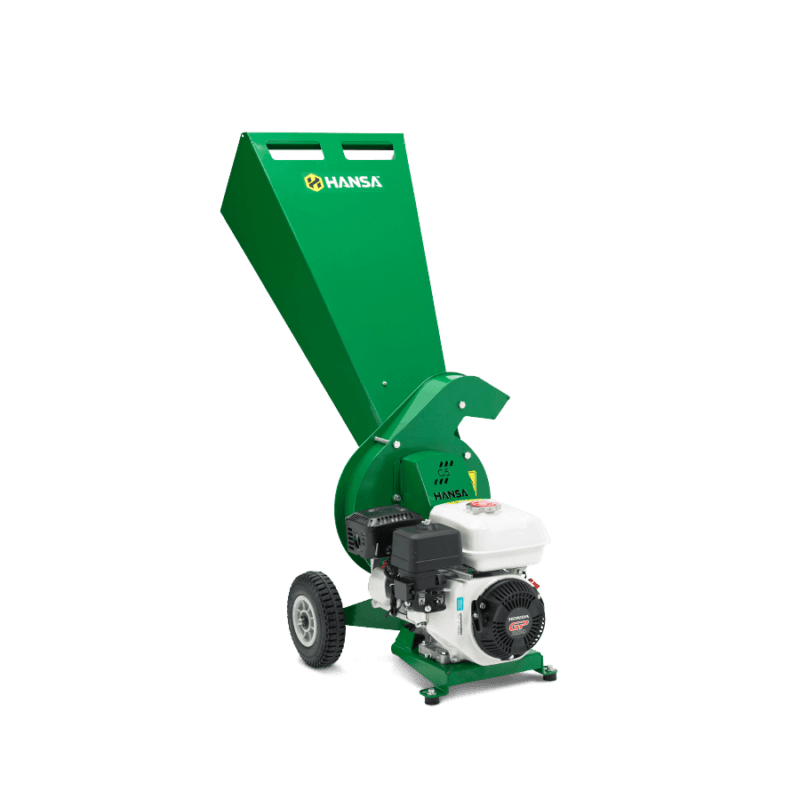

Hansa C5 Wood Chipper
C5
-
 Free Delivery in 3-5 Working Days
 -
 Flexible Rental Period
 -
 Free Easy Returns
Product Overview
The Hansa C5 is a compact petrol wood chipper with optimised self-feeding action for branches up to 60 mm in diameter.
Chipping system
A Honda GP200 engine drives a 286 mm, 6.6 kg cutting disc with one A8 modified tool-steel knife at 3600 RPM. Material feeds through a 100 x 130 mm inlet and exits a fixed 585 mm-high outlet.
Mobility and suitability
The C5 weighs 67 kg and runs on solid 250 mm wheels for movement around a property. Confirm the 60 mm branch capacity and feed opening suit the intended workload before purchase or use.
What's in the box
-
Product Type
Petrol wood chipper
-
Model
C5
-
Engine Brand
Honda
-
Engine Model
GP200
-
Maximum Branch Capacity
60 mm
-
Fuel Tank Capacity
3.1 L
-
Starting System
Recoil
-
Feed Opening
100 x 130 mm
-
Cutting Knives
1
-
Knife Size
110 x 42 x 6 mm
-
Knife Material
A8 Modified Tool Steel
-
Cutting Disc
286 x 10 mm; 6.6 kg
-
Cutting Disc Speed
3600 RPM
-
Self Feeding
Yes
-
Wheels
250 mm solid
-
Dry Weight
67 kg
-
Dimensions
1165 x 560 x 1195 mm
-
Discharge Chute
Fixed; 585 mm outlet height
Expert Local Advice
Friendly, experienced & local
Leading Brands
Quality Brands you can trust
Service & Spare Parts
Workshop Parts & Support
Residential & Commercial
Equipment for every job
FAQ
What size wood chipper do I need?
Choose a wood chipper according to the largest branches you regularly need to process, the amount of material you generate and the size of your property. Smaller garden chippers are ideal for routine pruning and smaller branches, while acreage and commercial machines provide greater chipping capacity and faster processing. It is generally better to choose some capacity above your normal branch size rather than continually operating a smaller machine at its maximum limit.
What does maximum branch diameter mean on a wood chipper?
Maximum branch diameter is the largest size of branch the manufacturer specifies that the chipper can process. It is an important guide, but timber species, branch shape, knots and moisture content can all affect how easily material feeds and chips. A straight, fresh branch may process more easily than a heavily forked or very dense hardwood branch of the same diameter, so choose a machine with enough capacity for the type of material you normally handle.
What is the difference between a wood chipper and a chipper shredder?
A wood chipper is primarily designed to cut woody branches into relatively uniform wood chips using sharpened blades. A chipper shredder or chipper-mulcher combines branch chipping with an additional shredding system for softer material such as leaves, hedge clippings and smaller green waste. If most of your material is tree branches, a dedicated chipper is usually the better choice, while mixed garden waste may suit a combination machine.
Should I choose a petrol or electric wood chipper?
Electric chippers can be quiet, convenient and relatively low maintenance for smaller gardens where mains power is readily available. Petrol chippers provide greater mobility and are commonly available with higher chipping capacities, making them particularly suitable for larger gardens, acreage and locations away from a power outlet. Choose according to branch size, workload and where around the property the machine will normally be used.
What wood chipper is best for acreage?
Acreage properties usually benefit from a petrol chipper with enough capacity for regular tree pruning, storm debris and larger branches. Consider not only maximum branch diameter but also feed-chute size, self-feeding performance, machine weight and how easily the chipper can be moved around the property. Tow-bar or tractor-compatible options can be particularly useful where material needs to be processed in different areas of a larger block.
Can a wood chipper handle Australian hardwood?
Yes, provided the chipper has sufficient capacity and power for the timber being processed. Dense Australian hardwood can place greater load on a chipper than softer timber, particularly where branches are dry, knotty or close to the machine's maximum rated diameter. If hardwood makes up a large part of your workload, choosing a more capable machine rather than operating continuously at maximum capacity can improve productivity and reduce strain on the equipment.
Can I chip green branches as well as dry timber?
Most wood chippers can process both fresh green branches and dry woody material within their rated capacity, but they can behave differently in the machine. Fresh branches may feed readily because they retain some flexibility, while very dry hardwood can be considerably tougher. Loose leaves, fibrous plants and soft garden waste may not process as effectively in a dedicated blade-style chipper and may be better suited to a chipper-shredder or mulcher.
What does self-feeding mean on a wood chipper?
A self-feeding chipper uses the action of its cutting system and airflow, or on larger machines powered feed rollers, to help draw branches into the machine once they are correctly presented to the feed chute. This reduces the amount of manual force required to keep material moving through the chipper. Self-feeding performance varies between machines, so feed design and chipping capacity are worth considering when comparing models.
Can I use the wood chips as garden mulch?
Clean wood chips from suitable untreated garden material can be useful for pathways, garden beds, surface mulch and composting applications. Chipping reduces bulky branches into material that is easier to transport and reuse around the property. Avoid processing treated or painted timber, manufactured board, metal, stones or other contaminated material, and make sure the original vegetation is appropriate for the area where the resulting chips will be used.
What maintenance does a wood chipper need?
Regular maintenance includes inspecting and maintaining the cutting knives, checking belts and other drive components, keeping the feed and discharge areas clean and following the engine servicing schedule on petrol machines. Sharp knives are particularly important because worn or blunt blades reduce chipping performance and place additional load on the machine. Always shut the chipper down and isolate it completely before performing maintenance, and follow the manufacturer's service and safety instructions.
Expert Local Advice
Friendly, experienced & local
Leading Brands
Quality Brands you can trust
Service & Spare Parts
Workshop Parts & Support
Residential & Commercial
Equipment for every job