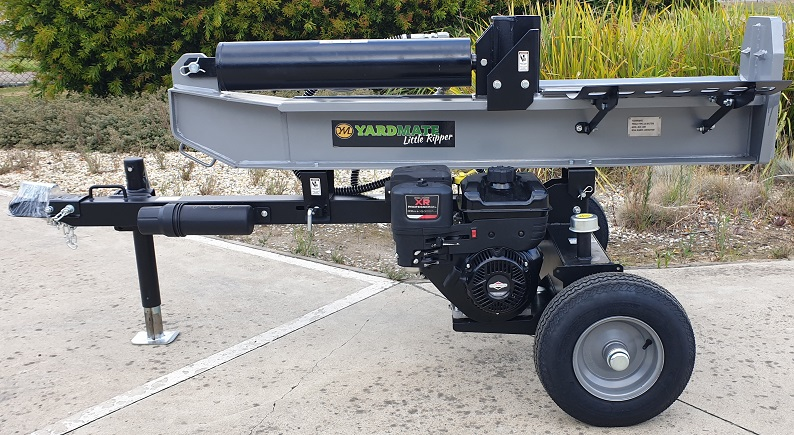

Yard Mate LS35 Briggs & Stratton 35 Ton Log Splitter
LS35 Briggs & Stratton 10 hp
-
 Free Delivery in 3-5 Working Days
 -
 Flexible Rental Period
 -
 Free Easy Returns
Product Overview
The Yard Mate LS35 is a 35-ton petrol log splitter powered by a 10 hp Briggs & Stratton OHV engine for larger firewood-processing work.
Splitting performance
It works horizontally or vertically and supports logs up to 25 inches (635 mm) long and 30 inches (762 mm) in diameter. The two-stage hydraulic system is rated at 17.5 GPM and 4000 psi, with cycle times up to 11.5 seconds.
Configuration and suitability
An auto-return valve, wheeled portable design and 50 mm coupler with safety chain support property use. Confirm the 35-ton capacity, assembly requirements and transport arrangements suit the intended workload before purchase or use.
What's in the box
-
Product Type
Petrol log splitter
-
Model
LS35
-
Splitting Force
35 Ton
-
Engine Brand
Briggs & Stratton
-
Engine Type
10 hp OHV petrol engine
-
Maximum Log Length
25 in (635 mm)
-
Maximum Log Diameter
30 in (762 mm)
-
Cycle Time
Up to 11.5 seconds
-
Hydraulic Pump
Two-stage, 17.5 GPM
-
Hydraulic Pressure
4000 psi
-
Operating Position
Horizontal and vertical
-
Tow Hitch
50 mm coupler with safety chain
-
Starting System
Recoil pull start
Expert Local Advice
Friendly, experienced & local
Leading Brands
Quality Brands you can trust
Service & Spare Parts
Workshop Parts & Support
Residential & Commercial
Equipment for every job
FAQ
How many tonnes of splitting force do I need?
The amount of splitting force you need depends on the diameter of the logs, the timber species, how knotty the wood is and how frequently you intend to split firewood. Smaller electric splitters can be very effective for regular household firewood, while larger hardwood rounds and demanding acreage or commercial work may require substantially more force. Rather than choosing purely on the biggest tonnage figure, match the splitter to the timber you normally process.
Should I choose an electric or petrol log splitter?
Electric log splitters are quiet, easy to start and generally require less routine maintenance, making them convenient around the home or shed where suitable mains power is available. Petrol splitters are more portable because they do not rely on an electrical outlet and are well suited to paddocks, farms and larger properties. Petrol machines are also commonly available in higher-capacity models for regular heavy-duty firewood processing.
What is the difference between a hydraulic and kinetic log splitter?
A hydraulic log splitter uses hydraulic pressure to push a ram and wedge steadily through the timber. Kinetic splitters store energy in flywheels and release it rapidly through the splitting mechanism, which can provide a much faster cycle. Hydraulic machines are widely used and provide controlled, powerful splitting, while kinetic models can be particularly productive when processing a large number of suitable logs.
What size logs can a log splitter handle?
Every log splitter has maximum recommended log dimensions, usually expressed as log length and diameter. These figures vary considerably between compact domestic machines and large heavy-duty splitters. Timber type also matters: a straight-grained log may split easily while a smaller knotty or dense hardwood log can be much more difficult. Check both the manufacturer's log-capacity specification and splitting force before choosing a machine.
What log splitter is best for Australian hardwood?
Dense Australian hardwoods can require considerably more splitting force than softer or straight-grained timber. If you regularly process species such as red gum, ironbark or similarly tough hardwood, choose a splitter specifically suited to demanding timber rather than relying only on maximum log diameter. Larger rounds, knots and twisted grain can all increase the force required, so frequent hardwood processing generally justifies a more capable machine.
Is a horizontal or vertical log splitter better?
Horizontal log splitters are convenient when the logs are light enough to lift comfortably onto the splitting bed. Vertical-capable machines can be useful for larger and heavier rounds because the log can remain closer to ground level instead of being lifted onto the machine. Some heavy-duty splitters can operate in both positions, giving you flexibility according to the size and weight of the timber being processed.
What does cycle time mean on a log splitter?
Cycle time describes how quickly the splitting mechanism completes a splitting stroke and returns ready for the next log. A shorter cycle can make a significant difference when processing large quantities of firewood. Kinetic splitters can have very fast cycles, while hydraulic splitters generally operate more slowly and steadily. When comparing machines, consider cycle time together with splitting capacity rather than judging performance on tonnage alone.
Does knotty or difficult timber require more splitting force?
Yes. Log diameter is only one factor in how difficult timber is to split. Dense hardwood, knots, forks, twisted grain and other irregularities can require substantially more force than straight-grained timber of the same diameter. This is why manufacturer maximum-diameter figures should be treated as a guide rather than a guarantee that every log of that size will split equally easily.
Is a four-way splitting wedge worth having?
A four-way wedge can split suitable logs into multiple pieces in a single stroke, which can speed up firewood preparation where you have reasonably straight and consistent timber. It may be less useful with very knotty, irregular or particularly difficult logs, where a standard wedge gives the machine a simpler splitting task. If you process a large volume of regular firewood, a compatible multi-way wedge can be a worthwhile productivity feature.
What maintenance does a log splitter need?
Maintenance depends on the type of splitter. Hydraulic machines require the hydraulic system, oil, hoses, seals and fittings to be checked and maintained according to the manufacturer's schedule. Petrol models also require normal engine servicing, while kinetic splitters may require inspection and lubrication of their rack, gears, belts or flywheel mechanism. Keep the machine clean, inspect it for damage before use and always follow the manufacturer's operating and maintenance instructions.
Expert Local Advice
Friendly, experienced & local
Leading Brands
Quality Brands you can trust
Service & Spare Parts
Workshop Parts & Support
Residential & Commercial
Equipment for every job